


Brushing your child’s hair can be a wonderful bonding experience, and with the right techniques, it can become a cherished daily routine. Gentle hair brushing is essential for making this experience enjoyable and stress-free for both you and your daughter.
Effective hair brushing techniques vary depending on hair type, and using the right tools can make a significant difference. By following a step-by-step approach, you can ensure that brushing your daughter’s hair is a positive experience.
Key Takeaways
- Choose the right brush for your daughter’s hair type.
- Be gentle when brushing to avoid causing discomfort.
- Make hair brushing a positive experience with praise and affection.
- Brush hair regularly to prevent tangles and knots.
- Use a detangling spray or conditioner for easier brushing.
Understanding Your Daughter’s Hair Type
The key to brushing your daughter’s hair lies in understanding its specific characteristics. Different hair types have unique needs, and recognizing these differences is crucial for effective hair care for kids.
Hair type is generally categorized into straight, wavy, curly, and coily hair. Each type has its own set of characteristics that influence how it should be brushed and cared for.
Straight, Wavy, Curly, and Coily Hair Differences
Straight hair tends to be oily, while curly and coily hair types are often drier and more prone to tangling. Wavy hair falls somewhere in between. Understanding these differences is essential for choosing the right brushing techniques and tools.
| Hair Type | Characteristics | Brushing Needs |
|---|---|---|
| Straight | Oily, less prone to tangling | Gentle brushing, less frequent washing |
| Wavy | Moderately oily, some tangling | Regular brushing, moderate products use |
| Curly/Coily | Dry, prone to tangling | Wide-tooth comb, gentle detangling, moisturizing products |
Fine vs. Thick Hair Considerations
Hair thickness is another important factor. Fine hair requires gentler brushing to prevent breakage, while thick hair can withstand more robust brushing but may need more effort to detangle.
How Hair Texture Affects Brushing Approach
The texture of your daughter’s hair significantly affects the brushing approach. For instance, detangling sprays can be very helpful for curly or coily hair, making the brushing process less painful and more effective.
By understanding your daughter’s hair type and its specific needs, you can adopt a more effective and gentle brushing technique, making detangling hair a less daunting task.
Essential Hair Brushing Tools and Products
The right hair brushing tools can make all the difference in your daughter’s hair care routine. With the vast array of brushes and products available, selecting the most suitable ones can be overwhelming. However, understanding the purpose of each tool and product is key to a stress-free hair brushing experience.
Types of Brushes and Their Purposes
Different brushes serve different purposes, making it essential to choose the right one for your daughter’s hair type. Let’s explore some common types of brushes and their uses.
Detangling Brushes and Wide-Tooth Combs
Detangling brushes and wide-tooth combs are designed for gently working out knots, especially in curly or tangled hair. They are a must-have for minimizing breakage and reducing pain during brushing.
Paddle Brushes and Round Brushes
Paddle brushes are ideal for smoothing and straightening hair, while round brushes are used for styling and adding volume. Using the right brush can make a significant difference in achieving the desired hairstyle.
Specialty Brushes for Different Hair Types
There are specialty brushes designed for specific hair types, such as brushes with flexible pins for curly hair or brushes with boar bristles for distributing natural oils. Choosing the right specialty brush can enhance the brushing experience.
Must-Have Hair Products for Smooth Brushing
In addition to the right brush, using appropriate hair products can further ease the brushing process. Detangling sprays and conditioners are particularly useful for reducing tangles and knots.
- Detangling sprays help to lubricate the hair, making it easier to comb through.
- Leave-in conditioners provide moisture and help to reduce frizz.
When to Replace Brushes and Cleaning Tips
Regularly cleaning and replacing brushes is crucial for maintaining hygiene and effectiveness. It’s recommended to clean brushes weekly and replace them every 6-12 months, depending on usage.
By understanding the different types of brushes and products available, you can create a hair care routine that is both effective and enjoyable for your daughter.
Preparing Your Daughter’s Hair for Brushing
Preparing your daughter’s hair for brushing is a crucial step that sets the tone for a stress-free hair care experience. A well-prepared hair brushing routine involves more than just picking up a brush; it requires a thoughtful approach to detangling, conditioning, and creating a comfortable environment.
Pre-Brushing Routines for Wet Hair
For wet hair, using a wide-tooth comb or a detangling brush along with a generous amount of conditioner can make the detangling process much smoother. This is especially true for hair that is prone to tangling or knotting. Start by gently working out the tangles from the ends of the hair, working your way up to the roots.
| Hair Type | Recommended Tool | Recommended Product |
|---|---|---|
| Wet Hair | Wide-tooth comb or detangling brush | Conditioner |
| Dry Hair | Soft-bristle brush or detangling brush | Detangling spray |
Pre-Brushing Routines for Dry Hair
For dry hair, a light application of a detangling spray can help make the brushing process smoother and less painful for your daughter. This is particularly helpful for hair that is prone to tangling or has been exposed to styling tools or environmental stressors.
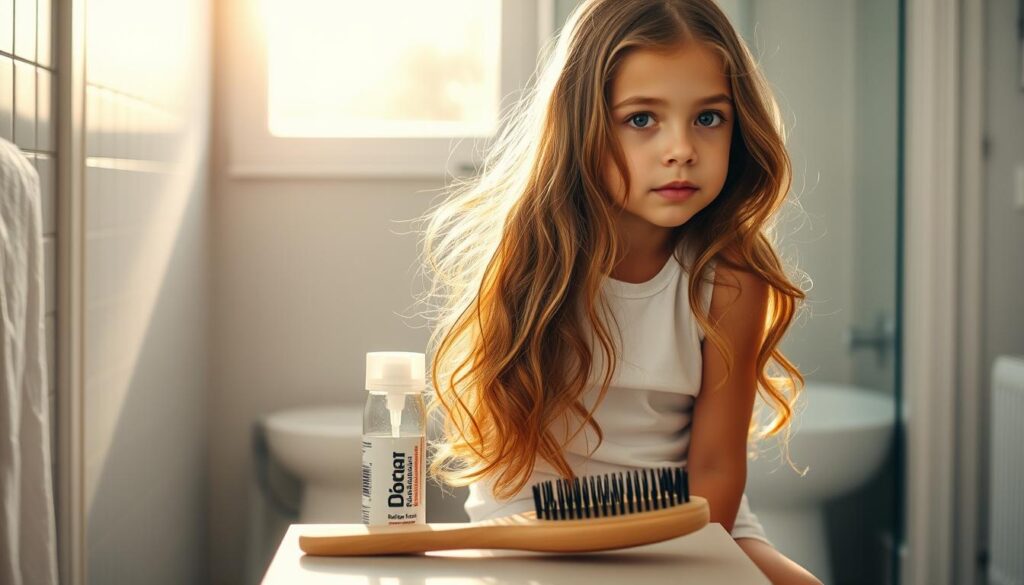
Creating a Comfortable and Positive Environment
Creating a comfortable and positive environment is crucial for making the hair brushing experience enjoyable for your daughter. Consider brushing her hair while watching a favorite TV show or listening to soothing music. This can help distract her from any discomfort and make the experience more pleasant.
How to Brush My Daughter’s Hair: Basic Techniques
Brushing your daughter’s hair effectively requires a combination of the right techniques and gentle care. Mastering these techniques can make hair care a positive experience for both of you.
The Section-by-Section Method
The section-by-section method involves dividing your daughter’s hair into manageable sections and brushing one section at a time. This approach is particularly helpful for hair with a lot of tangles or knots.
By focusing on one section, you can detangle and brush more efficiently, reducing the risk of causing discomfort or pain.
Proper Hand Positioning and Gentle Pressure
Proper hand positioning is crucial when brushing your daughter’s hair. One hand should hold the hair section you are working on, while the other hand brushes.
This technique helps control the brushing process and applies gentle pressure, which is essential for avoiding pain, especially when dealing with tangles.
Direction and Motion: Top-Down vs. Bottom-Up Approaches
The direction and motion of brushing can significantly impact the detangling process. The top-down approach starts from the top of the head and works its way down, which can be effective for some hair types.
However, for hair with a lot of tangles, the bottom-up approach is often more gentle and effective, as it starts from the ends and works its way up, minimizing knots and breakage.
| Brushing Technique | Description | Best For |
|---|---|---|
| Section-by-Section | Divide hair into sections and brush one at a time | Hair with tangles or knots |
| Top-Down | Brush from top of head downwards | Straight or slightly wavy hair |
| Bottom-Up | Brush from ends upwards | Curly, coily, or tangled hair |
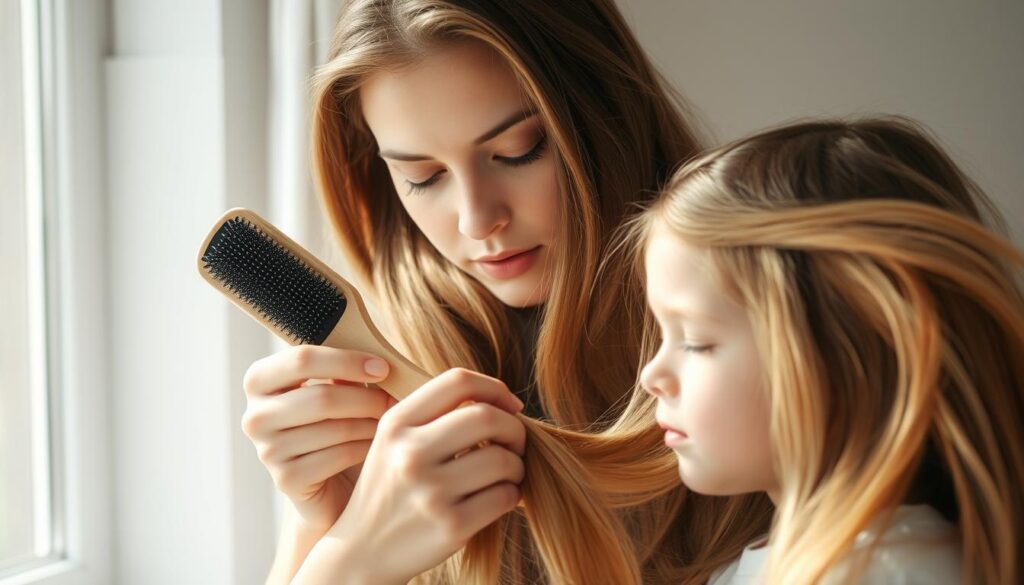
By incorporating these basic techniques into your hair brushing routine, you can make the experience more enjoyable and effective for your daughter.
Remember, the key is to be gentle, patient, and attentive to her hair care needs.
Tackling Tangles and Knots Painlessly
The process of detangling hair can be simplified with the right strategies and products. Tangles and knots are an inevitable part of hair care for many, but they don’t have to be a source of frustration or pain.
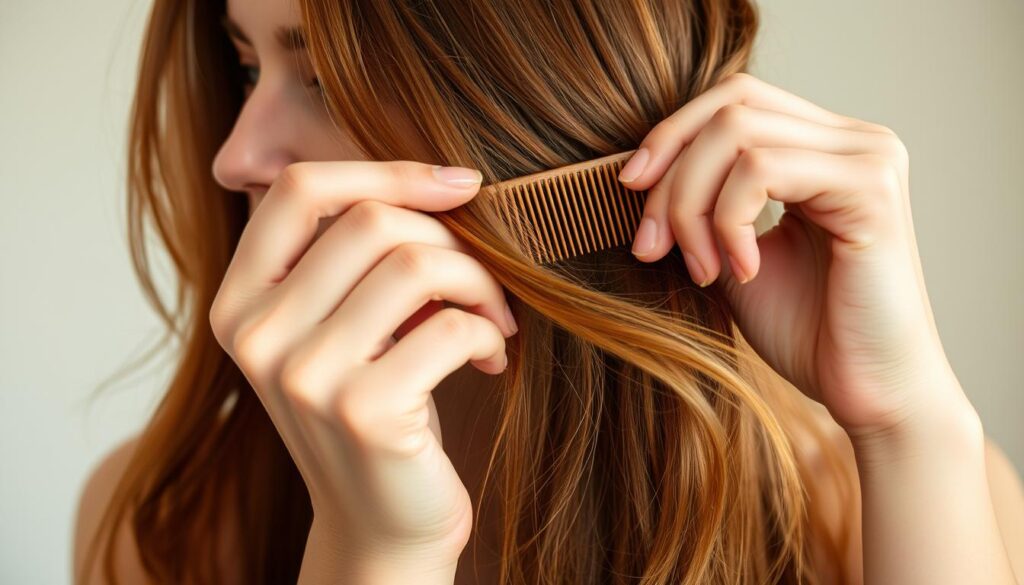
Using Detangling Sprays and Conditioners Effectively
Detangling sprays and conditioners are essential tools in making the detangling process smoother. Detangling sprays work by coating the hair with a lubricating layer, reducing friction between tangled strands. When using detangling sprays, it’s best to spray them evenly throughout the tangled area and gently work out the tangles with your fingers or a wide-tooth comb.
Conditioners, especially those formulated for detangling, can be applied after washing or as a leave-in treatment. They help in smoothing the hair cuticle, making it easier to comb through tangles. For best results, use a generous amount and focus on the ends, where tangles often occur.
Finger-Combing Techniques for Initial Detangling
Finger-combing is a gentle and effective method for initial detangling, especially for curly or very tangled hair. Start by applying a detangling product, then use your fingers to gently tease out tangles, working from the ends up. This method allows for a more nuanced approach, as you can feel the tangles and adjust your pressure accordingly.
| Detangling Method | Best For | Benefits |
|---|---|---|
| Finger-Combing | Curly or very tangled hair | Gentle, nuanced control |
| Wide-Tooth Comb | Most hair types | Effective for detangling, gentle on hair |
| Detangling Brush | Thicker or coarser hair | Robust, designed for tough tangles |
Working Through Stubborn Knots Without Tears
For stubborn knots, it’s crucial to be patient and gentle. Using a detangling tool or your fingers, work slowly around the knot, gently teasing it out. Applying a small amount of detangling spray or conditioner directly to the knot can help. If the knot persists, consider using a detangling brush designed for tougher tangles.
Preventing Tangles Before They Form
Prevention is key to minimizing tangles. Regular gentle brushing, using the right comb or brush for your hair type, and applying a leave-in conditioner or detangling spray can significantly reduce tangle formation. Additionally, braiding or putting hair up when sleeping or engaging in activities can help prevent tangles from forming.
Age-Specific Hair Brushing Approaches
Brushing your daughter’s hair is not a one-size-fits-all task; it requires a tailored approach based on her age. As children grow, their hair care needs evolve, and understanding these changes is crucial for maintaining healthy, manageable hair.
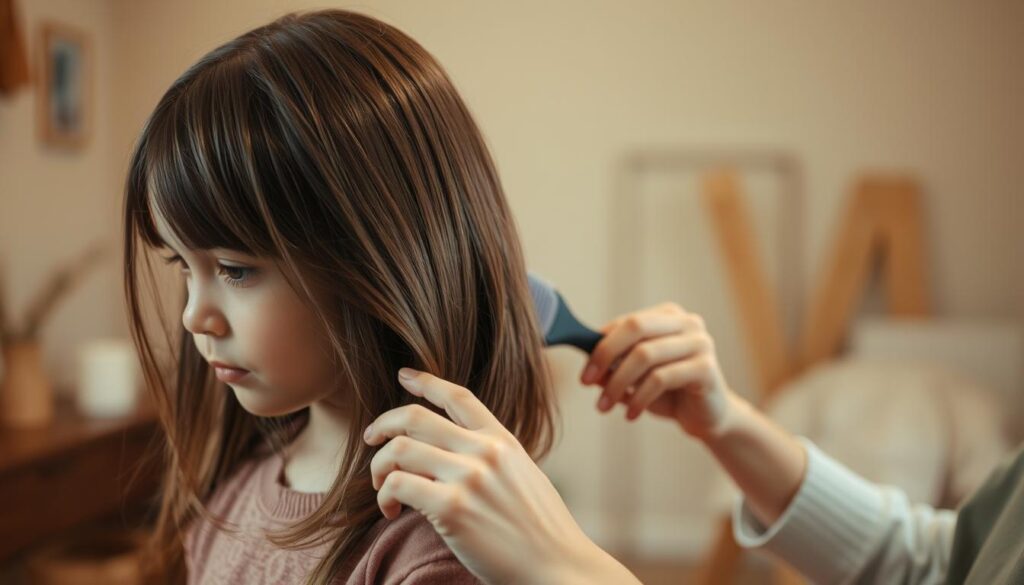
Toddlers and Preschoolers: Making It Fun
For toddlers and preschoolers, making hair brushing a fun experience is key. Using gentle, soft-bristled brushes and incorporating games or storytelling can make the process enjoyable. This age group requires patience and a soft touch to avoid causing distress or pain.
Using detangling sprays can also help make the brushing process smoother. At this age, it’s more about creating a positive association with hair care than about achieving a specific style.
Elementary School Age: Building Routines
As children enter elementary school age, establishing a regular brushing routine becomes important. This helps in maintaining their hair’s health and teaches them discipline. Encouraging them to participate in the brushing process can also foster a sense of responsibility.
A consistent routine can include brushing their hair at the same time every day, using a gentle brush suitable for their hair type, and praising their efforts to take care of their hair.
Tweens and Teens: Teaching Independence
For tweens and teens, teaching independence in hair care is crucial. This involves showing them how to brush their hair effectively, how to choose the right products for their hair type, and encouraging them to take ownership of their hair care routine.
It’s also an opportunity to discuss the importance of regular brushing for hair health and how it can impact their overall appearance and confidence.

By adopting age-specific hair brushing approaches, parents can help their daughters develop good hair care habits from a young age. Whether it’s making it fun for toddlers, building routines for elementary school-age children, or teaching independence to tweens and teens, the key is to be patient, consistent, and supportive.
| Age Group | Approach | Key Considerations |
|---|---|---|
| Toddlers and Preschoolers | Making it fun | Gentle brushes, detangling sprays, positive associations |
| Elementary School Age | Building routines | Consistency, gentle care, praise for responsibility |
| Tweens and Teens | Teaching independence | Choosing right products, effective brushing techniques, ownership |
Daily Hair Care Routines
A well-structured daily hair care routine can help prevent common hair problems and promote healthy hair growth. By incorporating simple practices into your daily schedule, you can keep your daughter’s hair clean, detangled, and healthy.
Morning Brushing Routines for School Days
Starting the day with a quick brushing routine can help detangle your daughter’s hair and prepare it for the day ahead. Use a gentle brush or a wide-tooth comb, especially if she has curly or tangled hair. This simple practice can make a significant difference in managing her hair throughout the day.
Evening Brushing and Nighttime Preparation
In the evening, take a few minutes to brush your daughter’s hair more thoroughly. This not only helps in detangling but also prepares her hair for nighttime. Consider braiding her hair or using a silk pillowcase to reduce tangles and prevent hair breakage while she sleeps.
Post-Activity Hair Care
After activities like swimming, sports, or play, it’s essential to check for and gently detangle any knots that may have formed. Use a detangling spray or conditioner to make the process smoother and less painful. Regular post-activity hair care can prevent matting and breakage, keeping her hair healthy and manageable.
By following these daily hair care routines, you can help your daughter maintain beautiful, healthy hair. Consistency is key, so make these practices a part of your daily routine.
Brushing Techniques for Different Hairstyles
To achieve the perfect look, it’s crucial to adapt brushing techniques to your daughter’s hairstyle. Different hairstyles require unique approaches to brushing to maintain their integrity and appearance.
Everyday Wear and Simple Ponytails
For everyday wear and simple ponytails, a straightforward brushing technique is often sufficient. Start by gently brushing the hair from the ends to the roots to detangle, then brush from the roots to the ends to smooth the hair. This technique helps in achieving a sleek and neat look.
Braids and Special Occasion Styles
For braids and special occasion styles, more intricate brushing and preparation are necessary. Begin by thoroughly detangling the hair, then use a finer brush or a detangling comb to smooth out the hair. For braids, gently brush the hair sections before braiding to prevent tangles.
Curly and Textured Hair Management
Managing curly and textured hair requires a different brushing technique. Use a wide-tooth comb or a detangling brush specifically designed for curly hair. Brush the hair in sections, starting from the ends and working your way up to minimize breakage and define curls.
| Hairstyle | Brushing Technique | Recommended Tools |
|---|---|---|
| Everyday Wear/Simple Ponytails | Gentle brushing from ends to roots, then roots to ends | Soft-bristle brush |
| Braids/Special Occasions | Thorough detangling, fine brushing before styling | Detangling comb, fine-bristle brush |
| Curly/Textured Hair | Sectional brushing with wide-tooth comb or detangling brush | Wide-tooth comb, detangling brush |
Conclusion
Brushing your daughter’s hair is a special bonding time that can be enjoyable for both of you. By following this hair brushing guide, you can create a positive experience that fosters a lifelong habit of gentle hair care.
Understanding your daughter’s hair type and using the right tools and techniques are essential for making hair brushing a stress-free experience. As she grows, adapting your approach to her changing needs will help you provide the best gentle hair care.
As a parent, you’re not only teaching your daughter about hair care, but also sharing valuable parenting tips that will benefit her in the long run. With patience and practice, you’ll become more confident in your ability to care for her hair, making this daily routine a enjoyable experience for both of you.
By applying the knowledge gained from this guide, you can make a positive impact on your daughter’s hair care routine, creating a lifelong habit of healthy and beautiful hair.
FAQ
What is the best way to brush my daughter’s hair if she has a lot of tangles?
For hair with a lot of tangles, use a detangling spray or conditioner and gently work out the tangles with a wide-tooth comb or a detangling brush, starting from the ends and moving up.
How often should I brush my daughter’s hair?
The frequency of brushing depends on her hair type and needs. Generally, brushing at least once a day can help prevent tangles and keep her hair healthy.
What type of brush is best for curly hair?
For curly hair, a detangling brush or a wide-tooth comb is recommended as they are gentler on curls and help minimize breakage.
How can I make brushing my daughter’s hair a positive experience?
Create a comfortable environment, be gentle, and make it a bonding time by watching a favorite TV show or listening to soothing music together.
What are some tips for brushing my daughter’s hair when it’s wet?
When brushing wet hair, use a generous amount of conditioner, and gently detangle with a wide-tooth comb or a detangling brush, starting from the ends.
At what age should I start teaching my daughter to brush her own hair?
You can start teaching your daughter to brush her own hair around the age of 4 or 5, depending on her maturity and ability to handle the task gently.
How do I prevent tangles from forming in my daughter’s hair?
Regular gentle brushing, using the right hair products, and protective styles like braids can help prevent tangles.
What should I do if my daughter’s hair is very knotted and brushing is painful for her?
For very knotted hair, apply a generous amount of detangling spray or conditioner, and gently work out the knots with your fingers or a wide-tooth comb before using a brush.
Can I use the same brush for different hair types?
It’s best to use a brush that is suitable for your daughter’s hair type. Using the wrong brush can lead to damage or inefficiency in detangling.
How often should I clean and replace my daughter’s hair brushes?
Clean hair brushes regularly by removing hair and washing with mild soap. Replace brushes every 6-12 months or when they show signs of wear.