

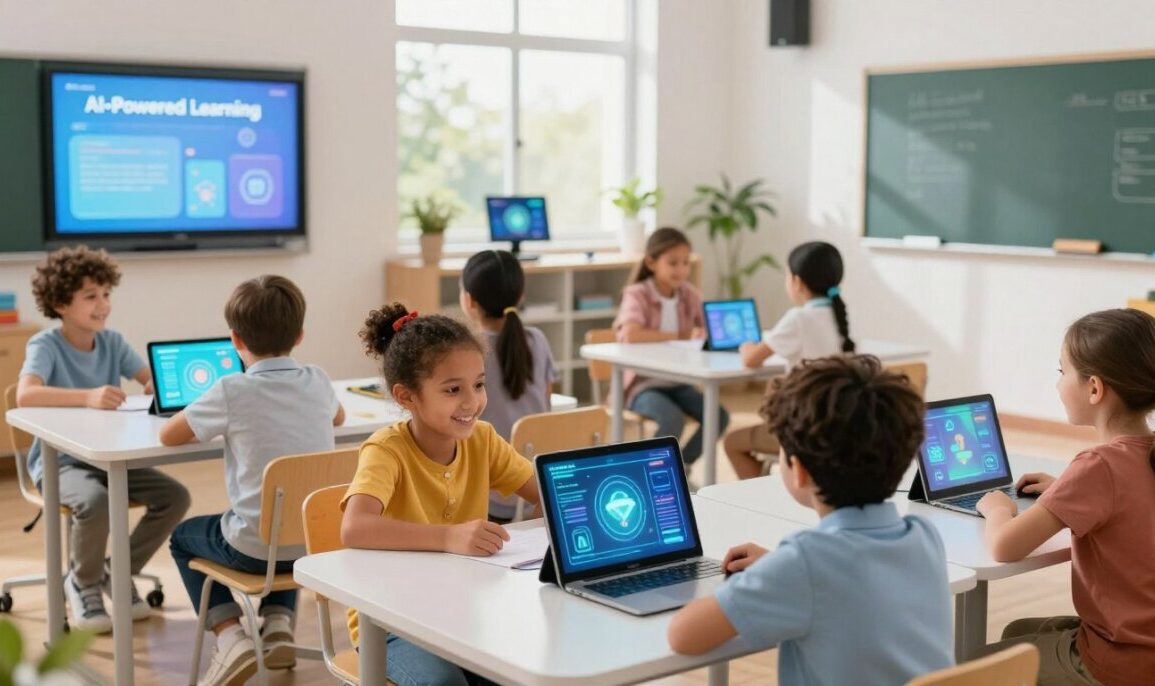

The way we learn is undergoing a significant transformation, thanks to the integration of AI-powered learning systems. These innovative technologies are revolutionizing the educational landscape, making it more personalized and effective for young minds.
By leveraging advanced algorithms and machine learning capabilities, AI-powered learning platforms can tailor the learning experience to individual children’s needs, abilities, and learning styles. This personalized approach enables kids to learn at their own pace, filling knowledge gaps and building confidence.
Key Takeaways
- AI-powered learning is transforming the educational landscape.
- Personalized learning experiences are tailored to individual needs.
- Advanced algorithms and machine learning enhance learning effectiveness.
- Kids can learn at their own pace with AI-powered systems.
- AI-powered learning builds confidence and fills knowledge gaps.
The Current State of Educational Technology
As technology advances, the educational sector is witnessing a significant shift towards digital learning environments. This transformation is not just about incorporating technology into classrooms; it’s about creating a more adaptive, engaging, and effective learning experience for children.
From Traditional to Digital Learning Environments
The traditional classroom setup, where a teacher stands at the front lecturing students, is gradually giving way to more interactive and personalized learning experiences. Digital learning environments allow for a more flexible approach to education, where students can learn at their own pace and engage with material in a more hands-on manner.
The Need for Personalized Education
Every child learns differently, and personalized education aims to cater to these individual needs. By leveraging educational technology, educators can create learning plans that are tailored to each student’s strengths, weaknesses, and learning style.
Why AI is Revolutionizing How Children Learn
AI in education is revolutionizing the way children learn by providing adaptive learning experiences that adjust to their individual needs. AI-powered systems can analyze vast amounts of data to identify knowledge gaps and suggest customized learning pathways.
By integrating AI into educational technology, we can create a more inclusive, effective, and engaging learning environment that prepares children for success in a rapidly changing world.
AI Education for Children: Core Concepts and Technologies
Core concepts and technologies in AI education are pivotal in shaping the future of learning for young minds. As we delve into the world of AI-powered learning, it’s essential to understand the foundational elements that make this technology so impactful.
Defining AI-Powered Learning Systems
AI-powered learning systems are designed to provide personalized educational experiences for children. These systems utilize complex algorithms to analyze a child’s learning patterns, strengths, and weaknesses, and adapt the curriculum accordingly. By doing so, they ensure that each child receives a tailored learning experience that maximizes their potential.
Machine Learning in Educational Contexts
Machine learning is a critical component of AI-powered learning. It enables systems to learn from data and improve over time without being explicitly programmed. In educational contexts, machine learning can be used to predict student outcomes, identify knowledge gaps, and recommend customized learning pathways.
Natural Language Processing for Young Learners
Natural Language Processing (NLP) is another vital technology in AI education. It allows machines to understand, interpret, and generate human language, facilitating more effective communication between children and educational software.
Voice Recognition Applications
Voice recognition technology, a subset of NLP, enables children to interact with learning platforms using voice commands. This feature is particularly beneficial for young learners who are still developing their reading and writing skills.
Text Analysis and Reading Support
NLP also supports text analysis and reading comprehension. AI-powered tools can analyze a child’s reading level, identify areas of difficulty, and provide targeted support to improve their reading skills.
| Technology | Application in AI Education | Benefits for Children |
|---|---|---|
| Machine Learning | Personalized learning pathways | Improved learning outcomes |
| NLP | Voice recognition and text analysis | Enhanced reading and communication skills |
| AI-Powered Learning Systems | Adaptive curriculum | Tailored educational experiences |
By understanding and leveraging these core concepts and technologies, we can unlock the full potential of AI education for children, providing them with a more engaging, effective, and personalized learning experience.
Benefits of AI-Powered Learning for Young Minds
The use of AI in children’s education is opening up new avenues for personalized and effective learning. AI-powered learning systems are designed to adapt to the unique needs and abilities of each child, providing a more engaging and productive educational experience.
Personalized Learning Pathways
One of the key benefits of AI-powered learning is its ability to create personalized learning pathways tailored to individual children. This is achieved through advanced algorithms that assess a child’s learning style, pace, and abilities.
Adapting to Individual Learning Styles
AI systems can identify whether a child is a visual, auditory, or kinesthetic learner and adjust the content accordingly. For instance, a visual learner might be presented with more images and videos, while an auditory learner might receive more audio-based content.
Pace Optimization for Different Abilities
AI-powered learning platforms can also optimize the learning pace for each child. If a child is struggling with a particular concept, the system can slow down the pace and provide additional resources. Conversely, if a child is advancing quickly, the system can accelerate the learning process.
Real-Time Feedback and Assessment
AI-powered learning systems provide real-time feedback and assessment, enabling children to track their progress and identify areas for improvement. This immediate feedback loop helps in reinforcing learning and building confidence.
Engaging Content Delivery Methods
AI-powered learning platforms use a variety of engaging content delivery methods, including gamification, interactive simulations, and multimedia content. These methods make learning more enjoyable and interactive, increasing children’s engagement and motivation.
Supporting Special Educational Needs
AI-powered learning can also support children with special educational needs. For example, AI-driven tools can help children with dyslexia by providing customized reading materials and exercises tailored to their specific needs.
In conclusion, AI-powered learning offers numerous benefits for young minds, from personalized learning pathways to real-time feedback and support for special educational needs. As AI technology continues to evolve, we can expect even more innovative solutions to emerge, further enhancing the educational experience for children.
Current Applications of AI in Children’s Education
With the advent of AI, children’s education is experiencing a significant shift towards more personalized and engaging learning experiences. This transformation is evident in various applications of AI technology, which are redefining the way children learn and interact with educational content.
Intelligent Tutoring Systems
Intelligent tutoring systems (ITS) are AI-powered platforms that provide one-on-one learning experiences for students. These systems use machine learning algorithms to assess a child’s knowledge and learning style, adapting the content to meet their individual needs. ITS has been shown to improve learning outcomes by offering real-time feedback and guidance.
Gamified Learning Platforms
Gamified learning platforms leverage AI to create interactive and engaging educational experiences. By incorporating game design elements into learning activities, these platforms increase student motivation and participation. Gamification makes complex concepts more accessible and fun, enhancing the overall learning experience.
Language and Literacy Development Tools
AI-powered language and literacy development tools are designed to improve reading and writing skills in children. These tools use natural language processing (NLP) to analyze and respond to a child’s input, providing personalized feedback and guidance. They help children develop their language skills in an interactive and engaging way.
STEM Education Enhancement
AI is significantly enhancing STEM (Science, Technology, Engineering, and Mathematics) education for children. By providing interactive and adaptive learning experiences, AI-powered STEM tools make complex concepts more understandable and accessible.
Coding and Computational Thinking
AI-driven coding platforms introduce children to programming concepts through interactive coding lessons and projects. These platforms teach computational thinking, problem-solving, and logical reasoning skills, preparing children for a technology-driven future.
Math and Science Learning Applications
AI-powered math and science learning applications offer personalized learning experiences, adapting to a child’s learning pace and style. These applications make learning math and science more engaging and effective, using interactive simulations, videos, and real-world examples.
The current applications of AI in children’s education are diverse and rapidly evolving. As AI technology continues to advance, we can expect to see even more innovative and effective learning solutions emerge, further transforming the educational landscape for young learners.
Addressing Concerns About AI-Powered Learning
While AI-powered learning offers numerous benefits, it also raises several concerns that educators and parents must consider. As we integrate AI into educational systems, it’s essential to address these issues to ensure a balanced and effective learning environment.
Screen Time Management and Digital Wellbeing
One of the primary concerns is the impact of increased screen time on children’s health and wellbeing. Effective screen time management is crucial to prevent potential negative effects such as eye strain, reduced physical activity, and sleep disturbances. Educators and parents can work together to establish guidelines that promote healthy digital habits.
For instance, setting limits on screen time, encouraging regular breaks, and promoting physical activities can help mitigate these risks. Additionally, AI-powered learning tools can be designed to include features that monitor and manage screen time, providing insights and suggestions for a healthier balance.
Data Privacy and Security Considerations
Another significant concern is the protection of children’s personal data. AI-powered learning systems often require the collection and analysis of student data to provide personalized learning experiences. Ensuring the security and privacy of this data is paramount to prevent unauthorized access and potential misuse.
Educational institutions and EdTech companies must implement robust data protection measures, including encryption, secure storage, and transparent data usage policies. Parents and educators should also be informed about how student data is being used and have the ability to control it.
The Irreplaceable Role of Human Teachers
Critics of AI-powered learning often express concerns about the potential replacement of human teachers. However, the role of teachers is not only to impart knowledge but also to provide emotional support, guidance, and mentorship. AI should be seen as a tool to augment the teaching process, not replace it.
By automating certain tasks and providing personalized learning pathways, AI can help teachers focus on what they do best: teaching, mentoring, and inspiring their students. The human element in education is irreplaceable, and AI should be used to enhance, not diminish, the teacher-student relationship.
Ensuring Equitable Access Across Demographics
Finally, there’s the concern about ensuring equitable access to AI-powered learning tools across different demographics. It’s crucial that these technologies are accessible to all students, regardless of their socio-economic background or geographical location. Efforts to bridge the digital divide are essential to prevent exacerbating existing educational inequalities.
Initiatives such as providing affordable internet access, distributing devices to underprivileged students, and developing offline-capable learning apps can help ensure that AI-powered learning is inclusive and beneficial for all.
Implementing AI Education for Children at Home
As AI continues to transform the educational landscape, parents are increasingly looking for ways to implement AI-powered learning for their children at home. This shift is driven by the potential of AI to provide personalized, engaging, and effective learning experiences that can complement traditional classroom education.
Age-Appropriate AI Learning Tools and Platforms
Selecting the right AI learning tools is crucial for a child’s educational development. The choice of tools largely depends on the child’s age and educational needs.
Preschool and Early Elementary Options
For younger children, AI-powered learning tools often focus on basic skills such as alphabet recognition, numeracy, and social skills. Examples include interactive apps like ABCmouse and PBS Kids, which use AI to adapt to a child’s learning pace.
Middle and High School Resources
For older children, AI learning tools can be more sophisticated, covering subjects like mathematics, science, and languages. Platforms such as Khan Academy and Duolingo utilize AI to provide personalized learning pathways and real-time feedback.
Creating a Balanced Digital Learning Environment
While AI learning tools offer many benefits, it’s essential to maintain a balance between screen time and other educational activities. Parents should establish clear guidelines on the use of digital devices to ensure a healthy learning environment.
Parent Involvement and Monitoring Strategies
Parental involvement is key to the successful implementation of AI education at home. Parents should regularly monitor their child’s progress, provide guidance, and engage in discussions about what they’re learning.
Measuring Progress and Educational Outcomes
To assess the effectiveness of AI-powered learning, parents need to track their child’s progress regularly. Many AI learning platforms offer progress reports and analytics that can help identify areas of strength and weakness.
| AI Learning Tool | Age Group | Subjects Covered | Key Features |
|---|---|---|---|
| ABCmouse | Preschool – Early Elementary | Reading, Math, Art | Interactive games, Adaptive learning |
| Khan Academy | Middle – High School | Math, Science, Computing | Personalized learning, Progress tracking |
| Duolingo | Middle – High School | Languages | Gamified learning, Real-time feedback |
AI in American Classrooms: Case Studies and Best Practices
American classrooms are embracing AI to enhance teaching and learning outcomes. This integration is leading to innovative educational practices that are both effective and engaging.
Teacher-AI Collaboration Models
One of the key benefits of AI in education is its ability to collaborate with teachers. Teacher-AI collaboration models are being developed to ensure that AI systems complement the teaching process, rather than replace it. These models focus on using AI to provide real-time feedback, automate administrative tasks, and offer personalized learning pathways.

Successful Implementation Stories
Several American schools have successfully implemented AI-powered learning solutions. For instance, some districts have introduced AI-driven tutoring systems that have shown significant improvements in student outcomes. These stories highlight the potential of AI to transform education when implemented thoughtfully.
Professional Development for Educators
To effectively integrate AI into their teaching practices, educators need professional development opportunities. Training programs that focus on AI literacy and its application in the classroom are becoming increasingly important. These programs help teachers understand how to use AI tools effectively and how to integrate them into their existing curricula.
Overcoming Implementation Challenges
Despite the benefits, there are challenges to implementing AI in classrooms. Issues such as data privacy concerns and the need for equitable access to technology must be addressed. Schools are working to overcome these challenges by developing clear policies and investing in infrastructure that supports AI-powered learning.
The Future of AI Education for Children
The future of AI in children’s education holds much promise, with emerging technologies set to revolutionize learning. As we explore this future, it’s essential to consider the emerging technologies and approaches that will shape AI education.
Emerging Technologies and Approaches
Emerging technologies are transforming the educational landscape. Two significant areas of development are Virtual Reality (VR) and Augmented Reality (AR), and AI-Powered Robotics in Education.
Virtual Reality and Augmented Reality
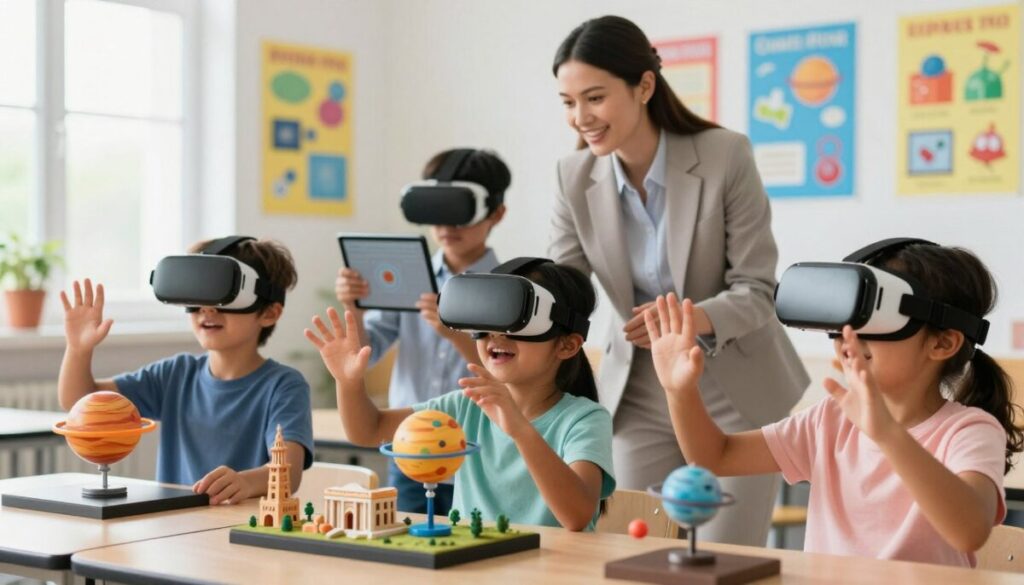
VR and AR are creating immersive learning experiences that make complex concepts more engaging and accessible. For instance, VR can transport students to historical events or distant planets, while AR can bring textbooks to life with interactive 3D models.
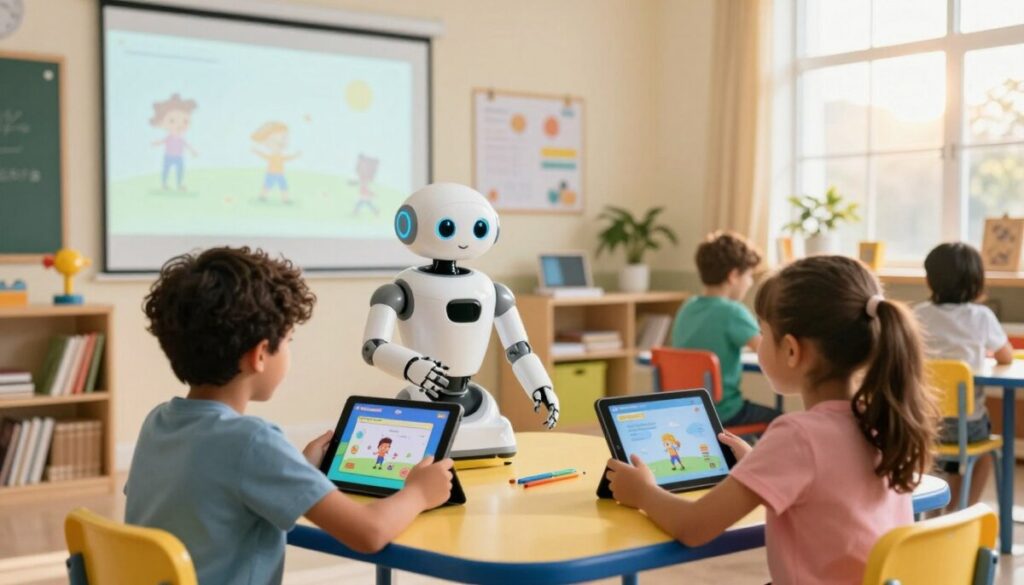
AI-powered robotics is another exciting development. Robots can now be programmed to teach various subjects, from coding to mathematics, providing hands-on learning experiences that foster creativity and problem-solving skills.
Preparing Children for an AI-Driven Workforce
As AI becomes more integral to various industries, it’s crucial to prepare children for an AI-driven workforce. This involves not only teaching technical skills but also fostering soft skills like critical thinking, collaboration, and adaptability.
- Critical thinking and problem-solving
- Collaboration and teamwork
- Adaptability in a rapidly changing environment
Ethical Considerations for Next-Generation Learning
With the advancement of AI in education, ethical considerations become paramount. Issues such as data privacy, bias in AI algorithms, and the digital divide need to be addressed to ensure equitable and fair AI-powered education for all.
- Data privacy and security
- Bias in AI algorithms and decision-making
- Addressing the digital divide
By considering these aspects, we can harness the potential of AI to create a more inclusive, effective, and engaging educational system for children.
Conclusion: Embracing the AI Learning Revolution
The integration of AI in children’s education is transforming the way young minds learn and grow. As we’ve explored, AI-powered learning systems offer personalized pathways, real-time feedback, and engaging content delivery methods that cater to individual needs.
By embracing AI, parents and educators can provide children with the tools they need to succeed in an increasingly complex world. The AI learning revolution is not just about technology; it’s about creating a more effective, inclusive, and supportive learning environment.
As we move forward, it’s essential to continue addressing concerns around screen time, data privacy, and equitable access. By doing so, we can ensure that the benefits of AI-powered learning are available to all, regardless of background or demographic.
The future of education is being shaped by the AI learning revolution. By embracing this change, we can unlock new opportunities for young learners and empower them to thrive in a rapidly evolving world.
FAQ
What is AI-powered learning, and how does it benefit children?
AI-powered learning uses artificial intelligence to create personalized learning experiences for children, adapting to their individual learning styles, pace, and abilities, making education more effective and engaging.
How does AI-powered learning support children with special educational needs?
AI-powered learning tools can be tailored to meet the unique needs of children with special educational needs, providing them with customized learning pathways, real-time feedback, and engaging content that enhances their learning experience.
What are some examples of AI-powered learning tools and platforms suitable for children?
Examples include intelligent tutoring systems, gamified learning platforms, language and literacy development tools, and STEM education enhancement tools, such as those that support coding, computational thinking, and math and science learning.
How can parents ensure their child’s digital wellbeing while using AI-powered learning tools?
Parents can manage screen time, monitor their child’s progress, and create a balanced digital learning environment by setting limits, encouraging physical activity, and engaging in their child’s learning process.
Are AI-powered learning tools accessible to all demographics, including those with limited financial resources?
Efforts are being made to ensure equitable access to AI-powered learning tools across different demographics, including initiatives to provide affordable access to technology and internet connectivity for underprivileged communities.
How can educators be prepared to effectively integrate AI-powered learning tools into their teaching practices?
Educators can participate in professional development programs that focus on AI literacy, learn how to effectively integrate AI-powered tools into their curriculum, and collaborate with other educators to share best practices.
What are some emerging technologies and approaches in AI education for children?
Emerging technologies include virtual reality, augmented reality, and AI-powered robotics, which are being explored for their potential to create immersive and interactive learning experiences that enhance children’s educational outcomes.
How can AI-powered learning prepare children for an AI-driven workforce?
AI-powered learning can help children develop essential skills for an AI-driven workforce, such as critical thinking, problem-solving, and creativity, while also introducing them to AI and its applications in various industries.