

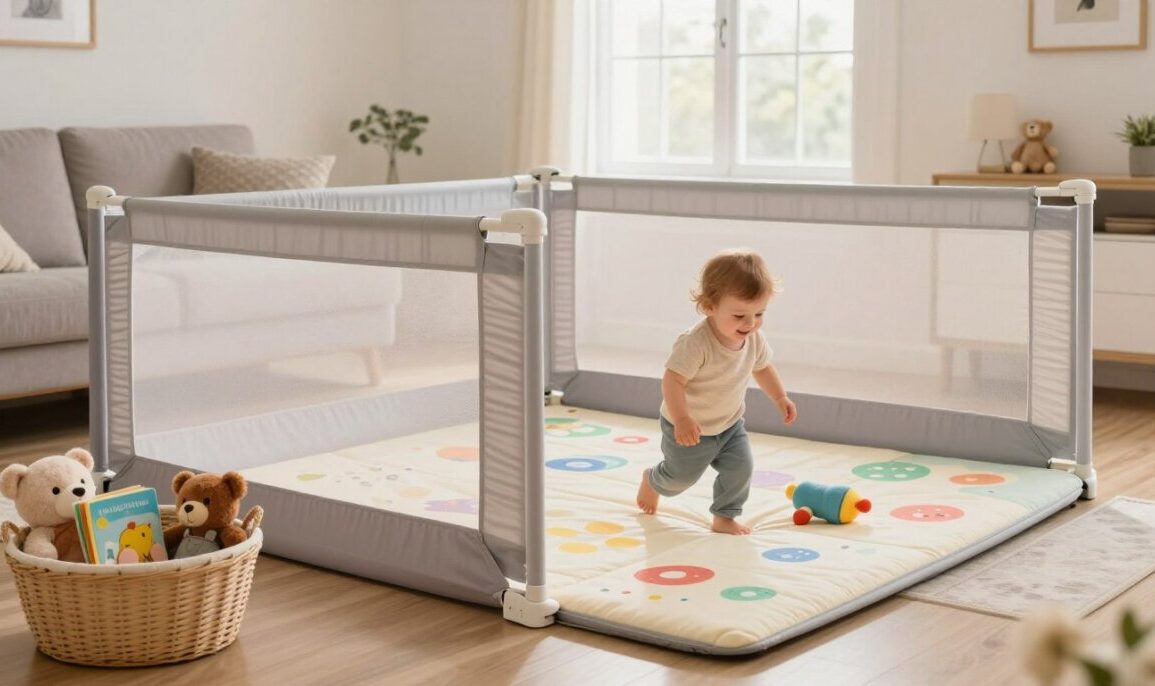

Surprising fact: within weeks a quiet sitter becomes a mover — many babies start crawling and pulling up by six months, and that shift can change risk overnight.
We promise a dad-friendly, sanity-saving plan that focuses on big wins. This is practical babyproofing for real life: meals to make, laundry piling up, and doors that must still open when our hands are full.
Our goal is simple. First, we cut high-consequence risks, then we tighten up as our child’s skills change. That keeps safety real, not perfect.
We’ll walk a step-by-step babyproofing guide you can follow on a busy weeknight. Expect quick checks like a crawl test, clearing clutter, locking versus moving hazards, and tackling outlets, cords, kitchen, and bath risks.
Bottom line: we aim for safer, not spotless, using a short checklist so parents save time and keep their sanity while protecting little explorers.
Babyproofing for Dads Starts With a Simple Mindset and a Realistic Goal
Begin with a plan that matches our budget, our time, and what we’ll actually use daily. We pick key zones and focus on what can cause real harm.
Why the mobile phase changes things fast:
Why the “mobile baby” stage changes everything fast
At about eight months, a baby may crawl, pull up, and grab items from low shelves. Crawling becomes cruising, and cruising becomes climbing.
That means yesterday’s harmless thing can suddenly be a hazard. We protect against falls, choking, poisoning, burns, tip-overs, and escapes.
How we balance safety, budget, and not turning our home into a fortress
Our rule: spend on high-consequence risks—stairs, chemicals, heavy furniture, and loose cords—and simplify elsewhere.
- Prioritize gates and anchors where injury would be severe.
- Store chemicals high or locked; leave low-risk drawers alone.
- Buy durable solutions we’ll actually use every day.
When “good enough” babyproofing is the safest plan for our sanity
We normalize the mental load for new parents and give permission to choose a plan we can maintain. A consistent, usable setup beats a perfect but unused one.
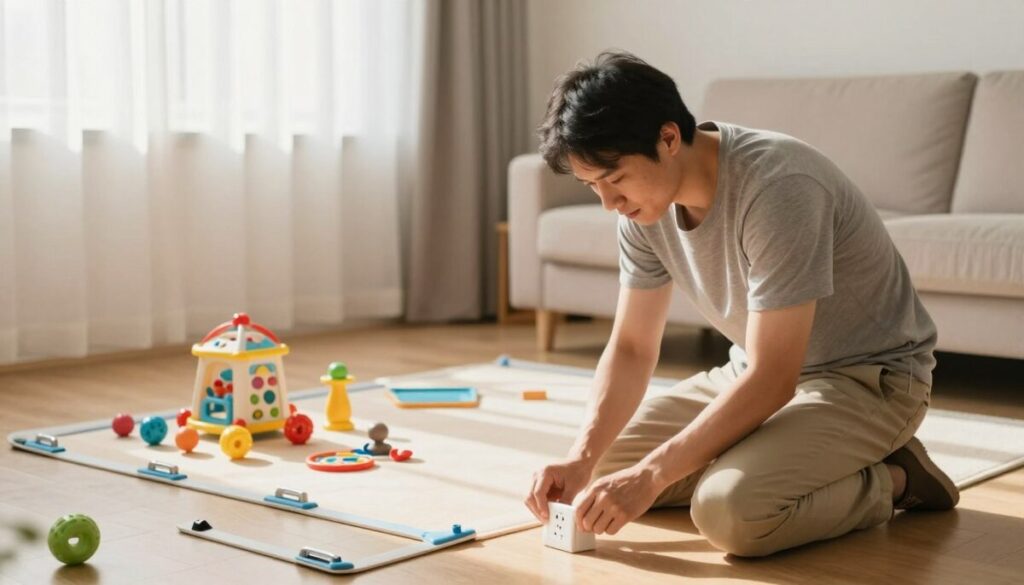
Practical Babyproofing Walkthrough: How to Babyproof a House Without Going Crazy
Start with a fast, practical sweep that finds what a crawling child can actually reach. Get down on hands and knees and scan each room at baby height for cords, small items, reachable outlets, and anything unsteady.
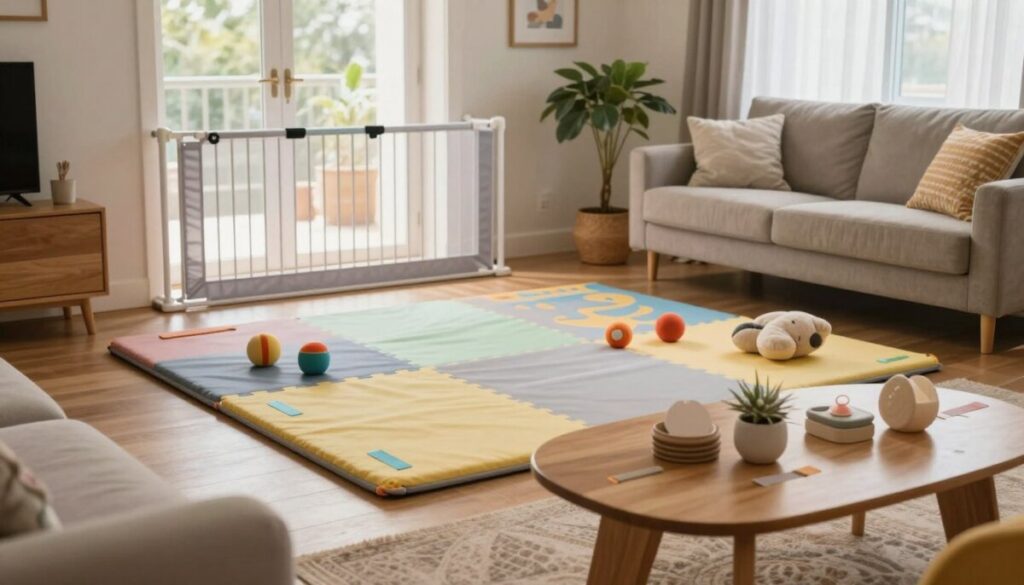
“Getting low for a crawl test shows hazards adults miss — it’s the best single check we do.”
Clear the floor and remove clutter that becomes a tripping or choking risk. Moving a coffee table can eliminate sharp corners and open a safer play space.
Make a simple decision rule for items we find: store up high if it’s dangerous and out of reach, lock up if it’s accessible but toxic, or leave accessible when it’s a safe play place that reduces fights.
- Use a few “safe drawers” with plastic toys so our child can explore without constant intervention.
- Start with the room where our baby spends most time, then expand as mobility grows.
- Repeat this crawl test every few months and add results to our babyproofing checklist.
Babyproofing Checklist Basics for High-Risk Home Areas
Let’s map the rooms that matter most so we can stop guessing where risks hide. Below is a short, practical list of babyproofing essentials that matches our daily routine and keeps home safety for dads realistic.
Stairs and landings
Stairs are high consequence: one tumble can change everything in seconds. Install sturdy gates at tops and bottoms of stairs and use them every time. Check gate latches weekly and keep doors that lead to stairs closed when possible.
Kitchens and bathrooms
These rooms hold cleaners, hot surfaces, knives, and standing water. Lock or move cabinets with chemicals and keep hot pots out of reach. Treat water like a risk—never leave it unattended when baby is nearby.
Bedrooms, nurseries, and living rooms
In bedrooms and nurseries, secure cords and anchor heavy furniture to the wall. Remove small items that become choking hazards and keep a simple sleep-safe setup.
- Living rooms: anchor TVs and bookcases to the wall; treat climbable furniture as a climbing gym.
- Quick scan checklist: stairs, gates, kitchen cabinets, water, cords, furniture anchors.
- Re-check cadence: monthly while mobile, then quarterly as skills change.
Electrical and Cord Hazards We Don’t Ignore
Outlets and dangling cords invite investigation — so we remove the temptation fast. Electrical safety is non-negotiable because outlets sit at perfect baby height and curiosity is relentless.
Outlet covers come in two practical families. Basic plastic plugs are cheap, but little hands can yank them out and put them in mouths. Self-closing plate covers slide shut and stay put, which cuts the “tiny piece in the mouth” problem.
Outlet covers vs. sliding plate covers
We prefer sliding plate covers in high-traffic spots. They work better in the nursery and living room, behind couches, and anywhere our child can stand or crawl and post up.
Power strips and cord management
Use a wall-mounted power strip cover and route cords behind furniture. Shorten, secure, and hide cords so they are not invitations to pull.
Cordless window options
Cordless window coverings are a big win for child safety. Modern shades look good and remove strangulation risk. When shopping, look for the “Best for Kids™” label so we pick safer window products without overthinking.
“Simple swaps — sliding outlet plates, covered power strips, and cordless window coverings — cut risk and save sanity.”
- Where it matters most: nursery, living room, behind seating.
- Choose sliding plate covers over plastic plugs when possible.
- Cover power strips and hide cords; go cordless at the windows.
Stairs, Doors, and Gates for Home Safety for Dads
We focus on simple fixes at key choke points so safety actually fits our daily flow. That keeps hazards contained without turning our home into a fortress.
Choosing gate locations that reduce stress during busy moments
Place gates where we most often carry things — at entries to the kitchen, living room, or mudroom. The best gate opens one-handed and stays shut when we need it.
Top-of-stairs vs. bottom-of-stairs strategy and what actually gets used
Top stairs protection is the highest priority because falls there are severe. If we must pick one spot, secure the top first.
Bottom-of-stairs gates help with pets and curious toddlers. Use both when possible, but start at the top.
Door safety basics to prevent slammed fingers and surprise escapes
Fit finger guards, slow-close hinges, or magnetic catches on interior doors to cut slams. For high-risk rooms we sometimes reverse a doorknob so adults hold the control on our side.
Exterior door add-ons that help us hear an exit attempt
Add a deadbolt plus a noisy bell, wreath chime, or door sensor so we hear a move toward the exit when hands are full. These small layers solve the one big problem: not knowing when someone is leaving.
“The gate we actually use is the one that fits our routine, not the one we wish we’d bought.”
- Choose gates that latch simply and open one-handed.
- Prioritize top stairs, then add bottom gates as needed.
- Use door guards and audible alerts on exterior doors.
Kitchen and Bathroom Babyproofing Essentials That Actually Work
Small swaps in the kitchen and bathroom cut major risks and stop daily chaos. We pick a few high-impact moves that protect against chemicals, hot surfaces, cuts, and water mishaps.
Cabinet and drawer safety: what we lock and what we leave
Lock the knife drawer, the under-sink cabinet, and any cabinet holding meds, alcohol, or cleaners. Use real locks or magnetic latches—rubber bands are a short-term hack, not a long-term fix.
Leave one low cabinet or a drawers with plastic bowls, cups, and toddler-safe plates as a controlled play zone. That reduces grabs and keeps toys from ending up on the floor.
Under-sink rules for cleaners, meds, and even “safe stuff”
Relocate cleaners and meds up high or behind a lock. Even green or child-safe products can be harmful in the wrong dose, so placement beats marketing claims.
Toilet trouble and quick chaos fixes
Stop toilet paper unrolling with a simple hair-tie trick, and fit a slow-close seat or lid lock to cut drown and mouthing risks. Store step stools, razors, and small toiletries out of reach.
Fridge and water controls that save cleanup and slips
Use a fridge water/ice lock or disable the dispenser. Preventing water spills reduces slip hazards and constant cleanup. For the door, add an audible alert if you need extra notice when it’s opened.

“Lock the real dangers, leave a safe drawer, and fix the little mess makers — that keeps safety usable.”
- Kitchen first: knives, heat, and choking hazards.
- Under-sink: true locks, not light barriers.
- Bathroom: hair-tie trick and out-of-reach storage.
Furniture, TVs, and Heavy Stuff That Can Tip
Securing heavy pieces is a low-effort step that gives outsized peace of mind for busy parents. Tip-overs are a core kid safety issue because toddlers pull, stand on drawers, and treat low furniture like ladders.
Our priority is obvious: anchor tall or easily climbed furniture and remove easy climbing routes in the living room and bedroom. This reduces daily worry without adding chores.
Anchor dressers, cabinets, and TVs to the wall
Focus on dressers, bookcases, media consoles, and TVs—anything tall, heavy, or with drawers kids reach. Anchors and straps stop a pull-and-fall before it starts.
When wall-mounting and strapping is the best set-it-and-forget-it fix
Anchoring into a stud uses screws or brackets that bite into the wall framing. That’s more reliable than relying on weight alone. Wall-mounting TVs clears floor space and cuts tipping risk.
- Top anchors: dressers, bookcases, media consoles (including TVs).
- Practical tip: use stud finders, metal brackets, or consumer-grade straps rated for your piece.
- Layout wins: remove low coffee tables or extra stools that give kids a boost toward climbable furniture.
“One proper anchor can end the daily fear loop and let us focus on real parenting tasks.”
Hidden Home Hazards New Dads Often Miss
Small, often-overlooked fixes add up to major safety wins for busy new dads. Beyond gates and locks, a few maintenance habits cut real risk and save time later.
Smoke detectors in bedrooms and on every level
Install smoke detectors inside each bedroom and on every floor, including basements. Test batteries monthly so checks don’t become a once-a-year scramble.
Carbon monoxide detectors and replacement timelines
Place carbon monoxide detectors on each level and match them to the power source you prefer—battery or plug-in with battery backup.
Replacement timelines: follow package directions; many brands like First Alert recommend replacing units every 7–10 years.
Plants, small objects, and floor vents that can turn into emergencies
Houseplants can be toxic. If a child mouths a leaf, call Poison Control for guidance—one quick mouthful can still matter.
Watch for small objects on the floor after guests or playtime. Coins, caps, and tiny toy parts pose choking risks when they end up within reach.
Old floor vents can swallow toys and affect airflow. Fit a stiff mesh or screen inside vents, and clean them periodically to avoid trapped items and fire risks.
“A focused five-minute sweep each week keeps hidden hazards from creeping back into our daily routine.”
- Quick routine: test detectors, scan the floor, check vents, and move any suspicious plants or items out of reach.
- Small wins: mesh in vents and monthly battery checks reduce big problems later.
- Keep it simple: set a phone reminder so safety checks happen at the same time every month.
Conclusion
Let’s end with a simple roadmap that keeps home safety practical and stress low.
Start by fixing the biggest risks: falls on stairs, poisons, strangulation hazards like cords, and furniture tip-overs. Do those well and leave low-risk items alone for now.
Remember this is ongoing. Our child changes fast, so we reassess regularly. Calm parents follow plans more consistently, and that reduces accidents.
Use a short checklist: do the crawl check this week, secure the top hazards, and create a small “yes” space for play. Fewer, well-used fixes beat a pile of unused products.
We can protect kids and still enjoy our home. Start small, act now, and build confidence as things change.