



One study found adults delay important tasks nearly 2 out of 7 days each week. Picture this: we’re negotiating bedtime like it’s a hostage scene, and the day vanishes.
We’re writing a practical guide, not a guilt trip or a personality check. Dr. Fuschia Sirois defines procrastination as an unnecessary voluntary delay despite expected harm. That fits the stuff we feel when forms sit undone and appointments slip.
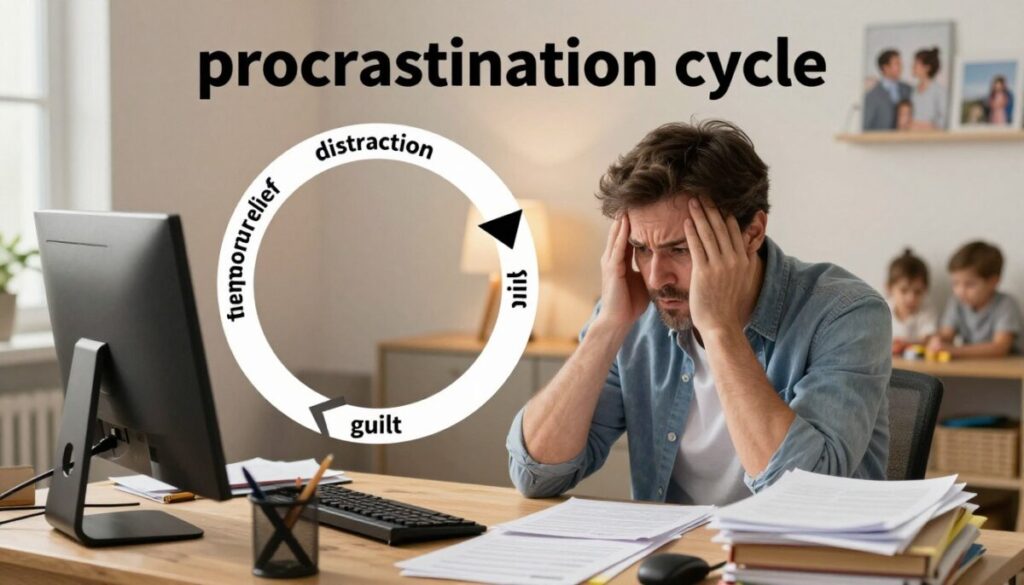
Here’s the core problem: this kind of delay isn’t about willpower alone. It’s emotions, constant context switching, and overload. That mix turns small tasks into stress and unfinished responsibilities.
We promise useful, experience-based strategies you can use in minutes. Think smaller actions, fewer priorities, less friction, and a simple plan for a busy day. Success looks like progress we can feel tonight—not a spreadsheet abandoned by Wednesday.
What parental procrastination really is and why it’s not just “being lazy”
Dads, putting off a tough conversation doesn’t mean you lack effort — it often means the job is emotionally heavy. Procrastination shows up when we know a task matters, we see the downside, and we still don’t start.
“Unnecessary voluntary delay despite expected harm.”
There’s a clear split between helpful strategic delay and harmful delay. Strategic waiting happens when we need better info or a calmer moment. Harmful delay creates missed deadlines, strained relationships, and extra stress.
- Our mind favors avoiding discomfort over following logic; anxiety, shame, or uncertainty fuels that avoidance.
- Hard parenting tasks often carry heavy feelings — screen rules, apologies, or asking for help.
- When everything feels urgent, decisions stack and even small tasks feel risky.
Quick self-check: if finishing a task would bring instant relief, that’s a sign the barrier is emotional, not practical. We’re not broken — we’re overloaded. That reframe opens clear ways forward.
Why busy dads get stuck in the procrastination cycle at home and at work
Every work call, snack request, and hallway detour quietly rewires our brain to expect interruption. That expectation makes starting focused work feel risky. We start, lose the thread, and tell ourselves “later”—and later becomes tomorrow.
Interruptions as the default setting
At home, interruptions aren’t random. Our brains learn the pattern and resist any task needing deep attention. The result is a repeating cycle where small duties slide into overdue tasks.
Decision fatigue and the end-of-day collapse
By evening we’ve made dozens of tiny choices—snacks, shoes, screen rules. Our executive function is spent. That makes even one simple task feel monumental and fuels delay.
Perfectionism, avoidance, and quiet distractions
When the stakes feel high with our kids, not starting feels safer than messing it up. Tough talks, limits, and schedules trigger avoidance even though they reduce long-term stress.
- Quiet thieves: scrolling, extra emails, reorganizing—these feel productive but steal precious time.
- We want to do well at work and at home. That pressure wears on our mood and mental health.
- This is a common challenge for modern fathers and families, not a personal failure.
“Design the day so the next right action is easy to start.”
parental Procrastination : How to solve with father-friendly strategies that work in real life
The trick isn’t more willpower; it’s small systems that let us win in noisy, busy minutes. We want tactics that survive interruptions, not promises about quiet hours that never come.

Use micro-tasks to beat overwhelm in five minutes or less
Pick one tiny visible action that moves a bigger task forward. Call one number, fill one form field, sort one pile. Set a timer for five minutes and stop when it rings—bank the win.
Build a realistic daily list that protects only a few must-dos
Make a short list of 1–3 must-do responsibilities that cut tomorrow’s stress. Write it like a dad: “After drop-off, one email; before dinner, one call; after bedtime, ten minutes prep.” Leave room for kid chaos.
Try the “task sandwich” method and reduce friction
Bookend focused work with kid time: ten minutes Lego → ten minutes admin → ten minutes outside. Shape your environment—phone in another room, a single charger spot, and browser blockers—so starting a task takes less effort.
Make starting the goal when motivation is low
Reframe success: show up briefly today. Starting builds momentum and builds the habits that beat procrastination over time. Short bursts, clear steps, and a loud-proof plan keep us present with our children and finishing more often.
Handle the feelings first so tasks stop feeling impossible
Start by naming the feeling—stress, shame, or plain anxiety—and then pick one tiny next step. When we label a mood, its grip loosens and a task shrinks.
Identify the emotion behind the delay
We say aloud: “This is stress,” or “This is anxiety.” Naming feelings cuts the avoidance cycle and makes the next move clearer.
Practice self-compassion and fast self-forgiveness
After a slip, we use kind language: “We didn’t finish today. We’re still the dad who shows up tomorrow.” That simple reset protects mood and mental health.
Lower the bar on purpose: aim for good enough
Perfection fuels delay. Instead, pick a quick win: a rough draft, a partial tidy, or a short boundary with our children. If starting a task takes under two minutes, start it now. If it’s bigger, do only the first step.

- Label the feeling.
- Forgive the slip and move on.
- Do one small, clear action.
Stop revenge bedtime procrastination and break the late-night regret loop
Late nights often feel like the only pocket of freedom we own, and that makes stealing sleep a tempting trade. But that short-lived evening win starts a cycle where night choices quietly hurt our next day.
What it is and why parents reach for “me time” at night
Revenge bedtime procrastination is when we trade sleep for solo leisure. After meeting everyone else’s needs, the night feels like the only controllable stretch of time.
Why poor sleep makes avoidance worse
Research and guidance from NIH and CDC stress that sleep is foundational for health. Most adults need about 7–9 hours a night.
When we miss that, focus, patience, and mood drop. Tasks and responsibilities feel harder. Chronic sleep loss can raise stress and link with higher anxiety and depression risk.
Move restorative leisure earlier
Shift the small pleasures into the evening routine or the late afternoon. Try a short walk, five pages of reading, light stretching, or three minutes of journaling.
Build a simple wind-down with clear boundaries
Use a shutdown cue: dim lights, park devices, set a timer for “one episode,” and announce a boundary—“I’m off duty at 10:30.” That hard stop protects tomorrow’s work and our presence with the child and kids.
- Quick plan: pick one calming activity before bed.
- Set a timer: limit leisure so night doesn’t become a second shift of scrolling.
- Identity move: we choose sleep because it makes us more present and healthier.
“Protecting sleep is not selfish. It’s a small act that preserves health and presence.”
Conclusion
Break the cycle with small, repeatable moves that stack into real change.
Procrastination is a pattern, not a moral failing. Name the feeling, pick one micro-task, and protect a bit of sleep. These moves calm anxiety, cut stress, and make decisions simpler.
Try this one-week plan: pick a single strategy—micro-tasks, a short must-do list, a task sandwich, an environment tweak, or a bedtime boundary—and run it for seven days. Track one clear step each day.
When interruptions grab the day, use a five-minute rule: if a task takes under five minutes, start it now. Progress compounds. Our children and family need steady presence more than perfection.
Reread this article when things slip. Pick one task, begin it, and let the win rebuild confidence. Lots of people and families are in this with us; showing up again tomorrow is the part that matters.